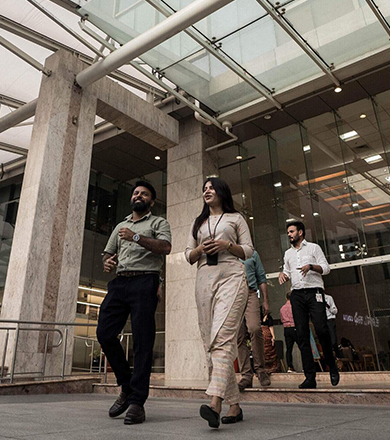
The time on the wall clock is 8:30 pm. The lights are still on in a glass-walled office in Bengaluru or maybe in Gurgaon's co-working space or in the high-rise in Mumbai. Arjun, a 26-year-old software engineer is looking at his screen. His eyes are wet, his neck is knotted, and he completed his core work 2 hours ago.
However, he hasn't made any movements. Why? His manager is in his cabin. As two of his seniors are still typing. In his unseen but not unwritten code of the office, early dismissal at 6:00 PM is synonymous with lack of work ethic. He's checking the email again and again, and each time, he gets a tingle of unease. He will even check Slack during dinner, even when he's at home. He'll read about people after 14 hours of working through LinkedIn before going to bed, and he will ask himself, "Am I doing enough?
It is the pulse of today's work environment in India. It's not working hard, it's poisonous productivity.
With this realization, we have come to a place in India where we can no longer say, ‘work to live', we are now saying, ‘live to work'. We're now "living to prove we are working. Exhaustion is a badge of honour and burnout has become a status symbol. But at what cost? At what point did people begin to think of resting as a form of sin?
But what is Toxic Productivity, Really?
Toxic productivity is the compulsive desire to be “productive” at every cost, even at the expense of your physical and/or emotional well-being. The voice from within tells you that you are as good as your last KRA (Key Result Area).
Productivity can be healthy, a continuous journey towards a desired outcome, or toxic, a headlong chase with no end. It has the following features:
Inability to Rest: “Productivity guilt” when sitting on the couch.
Anxiety in Stillness: The need to do something when there is no need, even on a Sunday afternoon.
Performance-Based Self-Worth: The feeling that one is a failure as a human being when he or she is not performing.
Emotional Masking: Feigning "passion" and "drive" as your nervous system is screaming for a rest.
This is not only a personal battle, but also a cultural phenomenon in India. We have a nation of more than 1 billion people, and a high degree of competitiveness is a reality of this country, from birth to death. We've been taught that we have to be running or else we're being replaced, whether it's board exams or the Great Indian Startup Hustle.
Why India Normalizes the Grind Cultural?
An unhealthy state of productivity is not a natural occurrence. It is served by deep-rooted cultural stories which can make it very difficult to put established limits in place.
1. The "Dedication" Trap
Late working in Indian offices is considered to be a measure of loyalty. We all know what it is, “The person who arrived on time is said to be "not a team player", while the COVID-19 hero, who joined a Zoom meeting with a 102-degree fever is said to be "a team player".
2. The second is to compare Culture and Social Proof. The second is comparison of Culture and Social Proof.
Comparisons are welcome in our society. Whereas in school, we were given the nick name Sharma ji ka beta for our grades, in this case it is overtime where we are compared to our fellow colleagues. “Rahul stayed till midnight to do the deck” is not an accolade for Rahul alone, it is a condemnation on everyone who didn't.
3. Hustle' Glorification in Startups
Innovation has been a thing to have introduced to the Indian startup ecosystem, but it has also been a negative romanticization of the burnout. I've heard it said that "blood, sweat and tears" is the only recipe for success, and it's true that this is the one and only thing founders have in common. This establishes a culture of fear in the workplace, forcing younger interns and associates to work themselves to the bone and lose their sanity in order to make their way into the “high growth” world.
The Psychology of the "Always-On" Brain.
So why do we need to do anything other than turn it off? How can an unread notification be a real threat?
Toxic productivity is psychological in nature, maintaining us in survival mode. Our brain's amygdala is always on alert when we're always under pressure to perform, in what is known as "fight or flight. This results in dysregulated nervous system.
If your nervous system is continually in overdrive, then your body can't get into a 'rest and digest' mode. That's why, sometimes, you may find yourself checking work e-mail at 11:00 PM, even if there is no crisis. Your brain has been programmed to find the dopamine rush of completing a task (no matter how insignificant) and has been conditioned to think that's the key to happiness.
The outcome is a vicious cycle of Chronic Stress and Emotional Exhaustion:
The Prefrontal Cortex (PFC) shut down when we overload it, as it is part of the brain responsible for decision making and creativity.
Workplace Anxiety: So afraid of failure, that we work too hard to prevent the thoughts of being fired, judged etc from bothering us.
Learned Helplessness: With time, workers feel they don't have any control over their schedules. They cease to ask for limits because they think, 'No? No, no, no. They no longer ask for limits because they presume to the answer is always NO.
The world is indeed different for people who are actually from India.
Look for these "normalized" behaviours if you aren't sure whether you work in a toxic environment:
The lunch-at-the-Desk Culture: When you eat your dabba while you are replying to emails, it's like wasting time to sit in the break room.
The Weekend Intrusion: Managers who email what they call 'quick queries' at the end of the day on Saturday and then ask for 'quick reply' on Sunday morning.
Senior leaders' “Humare Time Pe” Argument: “In our day, we did not complain about for working 16 hours.”
The Guilt of Vacations: Checking into your laptop from Goa's beaches, when you're afraid of what has been coming your way while you were away.
The Meeting Marathon: Meetings to talk about when the next meeting will be, and no time allowed to actually get work done, pushing “real work” into late night meetings.
Producers will lose total output due to the effects of hidden costs. The effects of hidden costs will result in producers' loss of total output.
Toxic productivity is rooted in a fallacy; that more time is more value. However, research continually shows otherwise.
Burnout is a worldwide phenomenon of the workplace, according to the World Health Organization (WHO). According to a study in 2022, almost 43% of the employees' experience depression or anxiety as a result of stress in their workplace in India.
Toxic productivity will result in:
Minimized creativity:
Constantly stressed nervous system cannot be creative. Original ideas need to be nurtured, to be let to incubate to sit in the quietness of the brain.
Stress reduces concentration, physically decreases parts of the brain responsible for concentration.
Increased Irritability:
It's hard to regulate your emotions. That's why there are “toxic” offices that feature sniping, passive aggression, and dysfunctional work relationships.
High Turnover, lots of employees are no longer working from passion, but rather from fear. Resentment grows out of fear and soon the employees start to quit.
Path to Healing: Towards sustainable productivity
What's stopping us from making a change in a culture that values the grind? It takes a leadership shift to make as well as an individual's shift.
Please note that this is not for the Individual, but rather for the Individual's humanity.
Challenge the Guilt: Remember that taking a break is not a punishment for doing something good it's a requirement for doing something good.
Choose Micro-Boundaries: Begin with small. NO SLACK after 8:00 PM until 8:00 AM. Stick to it.
Define Your Worth Outside Work: If your job holds the meaning of your life, a small setback in the workplace can be a big blow to your identity. Develop hobbies which are not connected to "output.
If you want to read more about this topic, see the books I recommend:
Don't Praise the Person Who Stayed Late: Focus on what he or she accomplished, not on the number of hours. Begin to applaud and encourage the individual who completed his/her task effectively by 5:00 PM.
Set an Example: If you’re a founder or manager, refrain from sending e-mails on Sundays. If your teammates are not feeling safe, then they won't feel safe either.
Focus on Psychological Safety: Allow an employee to state, "I'm overwhelmed and need to reprioritize" and have them not be seen as being weak.
The book A Hopeful Conclusion - The Future of Work is now out.
The “Great Indian Hustle” has taken us so far, but it can't go much further. With our productivity we are reaching a tipping point where the cost to the person is to the economy.
We need to deal with our employees no longer as machines. Employees aren't machines. They need rest, psychological safety, meaningful connection, and time away from work to function well.
The business organizations that will be the most successful in the future in India will not be the ones that have been using their employees to their maximum. It will be they who will know a healthy, well-rested, emotionally-sound employee is a creative powerhouse.
So tonight, when you have that impulse to send one final email, or that feeling of guilt that you'll close your computer at a “reasonable” time, relax.
Too busy doesn't equal being mentally healthy.
Exhaustion is no pre-requisite to success. In order to be human is not prohibited. It is OK to take a break. But most importantly, you are sufficient, even when you aren't doing anything.
Feeling like you always have to be “on”?
You don't have to wait until exhaustion becomes burnout. Talk to a mental health professional and start building healthier boundaries around work.